Why Pharma Needs a Cloud‑First, AI‑Native Partner: The πby3 Perspective
Pharma has always been a data-intensive industry. What's changed in 2026 is that the data is finally ready to work back.
Drug discovery. Clinical trials. Supply chain. Regulatory compliance. Commercial operations. Every function in pharma generates extraordinary volumes of data and for decades, that data sat in systems that couldn't talk to each other, on infrastructure that wasn't built to scale, and in formats that no AI model could meaningfully consume.
That era is ending. But the transition demands more than ambition. It demands the right foundation.
The Numbers Have Already Decided
The global AI in pharma and biotech market stood at $3.43 billion in 2025. It is projected to reach $154 billion by 2034 a 43.55% CAGR that makes it one of the fastest-growing enterprise technology categories on record. Pharma's investment in AI specifically is estimated to reach $2.51 billion in 2026 alone.
The commercial case is equally unambiguous. Strategic AI adoption could double pharmaceutical operating margins from roughly 20% to over 40% by 2030, generating an estimated $250 billion in value over five years. McKinsey puts generative AI's annual value potential across pharma's full value chain at $60–110 billion.
And yet, 68% of pharma and biotech leaders say that neglecting data quality and governance early is the primary reason AI initiatives fail.
The opportunity is large. The failure mode is consistent. The gap between them is infrastructure.
What "Cloud-First, AI-Native" Actually Means in Pharma
It does not mean migrating your on-premises systems to the cloud and calling it transformation. That is lift-and-shift, and it is not a strategy.
Cloud-first, AI-native means building infrastructure where every data pipeline is designed for AI consumption from the outset. Where clinical data, real-world data, manufacturing data, and commercial data are unified not federated across systems that require quarterly reconciliation. Where AI agents can act on live data streams, not quarterly snapshots.
The evidence supports this precision. Pharma firms adopting cloud-based platforms are seeing 52% faster trial timelines and 48% improved data integration efficiency. AI-enabled discovery workflows are reducing early discovery timelines by up to 40% and cutting costs by roughly 30%.
These are not pilot results. These are production outcomes from organizations that built the foundation first.
The Part Most Technology Partners Miss
Here is the consistent failure pattern πby3 sees across pharma engagements: organizations invest in AI tooling before the data infrastructure is ready to support it.
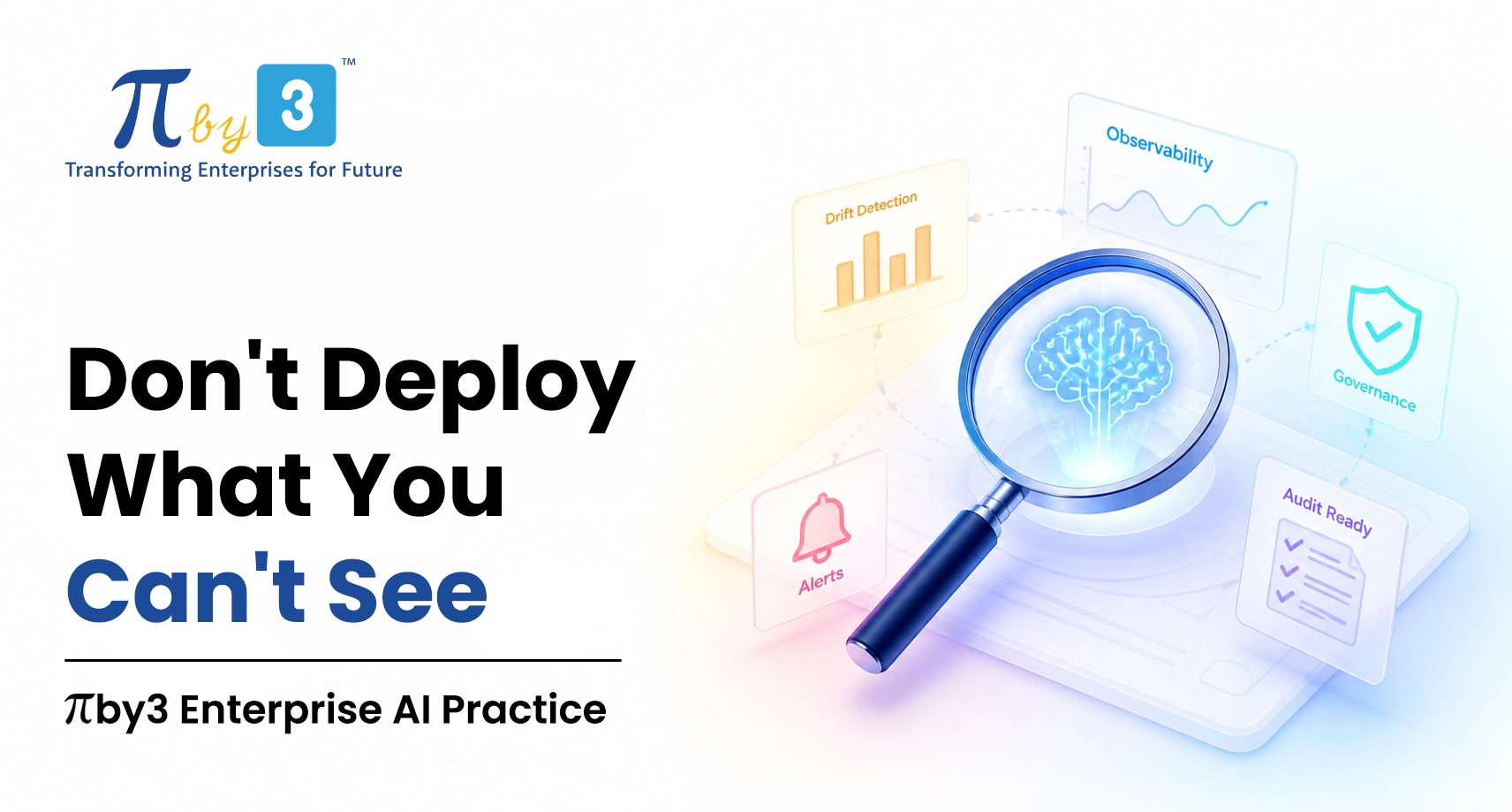
AI models don't run on intent. They run on clean, governed, real-time data pipelines. They require cloud environments that are compliant, observable, and built for autonomous workloads. And in pharma specifically, they require infrastructure that can operate under regulatory scrutiny where auditability is not a feature, it's a requirement.
The average operational technology asset in pharma manufacturing has been in service for 11 years many lacking the embedded security and AI integration required for autonomous operations. You cannot deploy Agentic AI on top of infrastructure that wasn't designed for it and expect governed outcomes.
87% of biopharma R&D leaders now view AI and machine learning as crucial to their success. But over 40% of agentic AI initiatives are expected to be cancelled by 2027 not because the technology failed, but because the data foundation wasn't ready.
This is precisely the gap πby3 is built to close.
The πby3 Approach: Infrastructure That Earns Its Intelligence
At πby3, we work with pharma and life sciences enterprises not as a software vendor or a tools integrator but as a cloud and AI transformation partner who builds the plumbing before recommending the intelligence layer.
Data Engineering for AI-ready pipelines. Through Pi-Ingest and Pi-Flow, we build scalable, modular data pipelines that consolidate multi-source pharma data, clinical, operational, commercial, and real-world into a clean, trusted foundation. One that AI can consume.
Cloud infrastructure designed for pharma workloads. Our Cloud Consulting & Delivery practice designs multi-cloud environments across AWS, Azure, and Databricks built for the compliance, security, and scalability that pharma demands. ISO 27001 certified, governed from the first architecture decision.
Agentic AI that operates in production, not sandboxes. Through GenAI-in-a-Box™, our enterprise Agentic AI platform, we deploy intelligent agents that integrate into pharma workflows from day one regulatory document review, pharmacovigilance monitoring, clinical operations reporting, and commercial analytics. Pre-configured. Observable. Auditable.
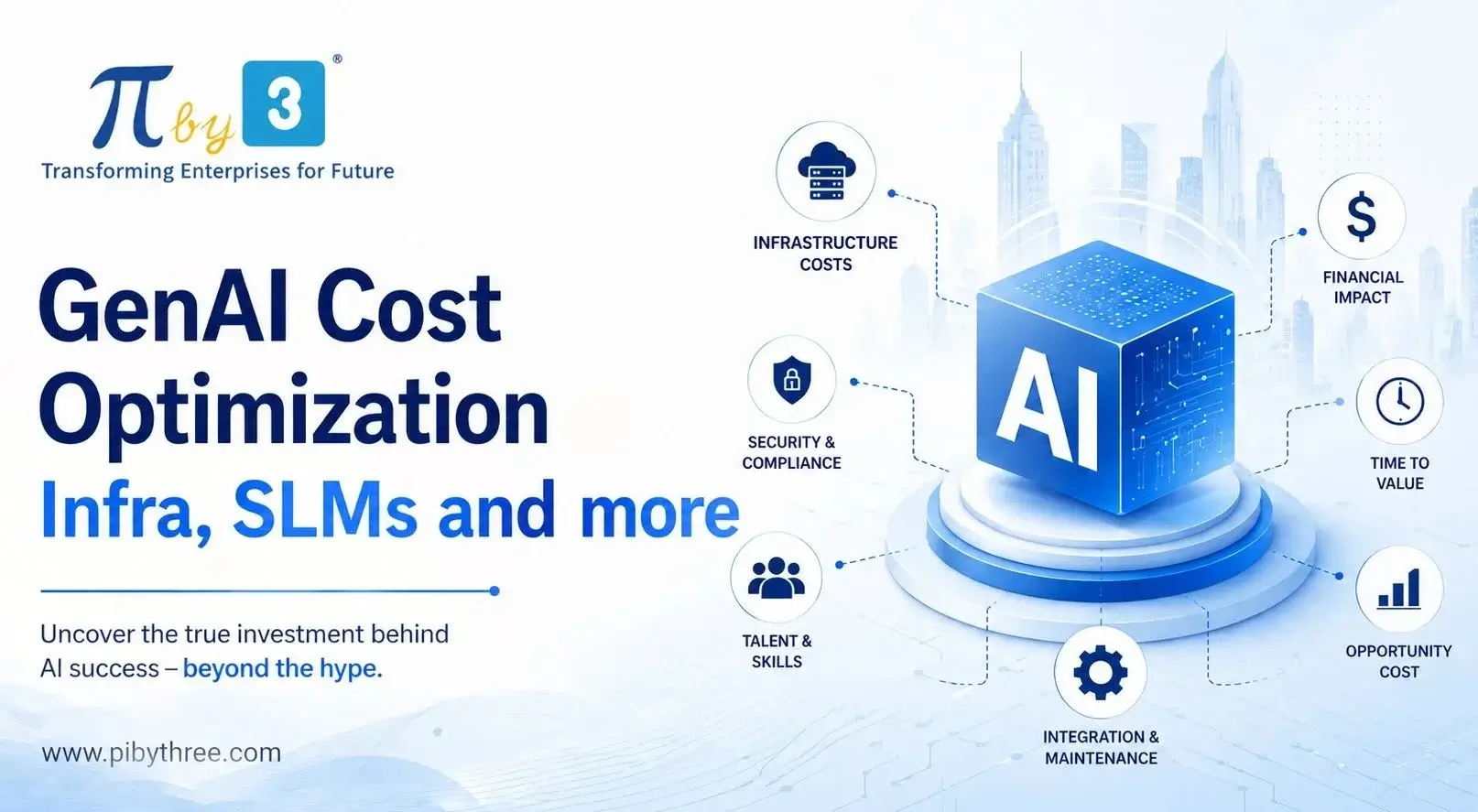
FinOps that keeps cloud spend accountable. As pharma cloud spend scales, so does waste. Our Pi-FinOps accelerator gives finance, engineering, and commercial teams unified visibility into cloud costs so AI investment is defensible at board level, not just promising in a PoC deck.
2026 Is Not a Preparation Year. It Is an Execution Year.
Industry leaders are aligned: 2026 is the year Agentic AI stops being a discussion and starts making a measurable difference in R&D processes. The organizations who built their cloud and data foundations in 2024 and 2025 are already seeing it.
The ones still debating architecture are watching from the outside.
Pharma's data is rich, complex, regulated, and consequential. It deserves a partner who understands that building for compliance and building for speed are not competing objectives they are the same objective, designed well.
That is what πby3 brings to pharma. Not a product pitch. A transformation practice.
If your organization is navigating the gap between AI ambition and AI execution in pharma, we'd welcome the conversation.