There's a name for that misuse. Gartner calls it "agent washing." And it's costing enterprises more than just credibility.
Your AI assistant answers questions. An AI agent gets things done. That one sentence is worth more than any vendor deck you will read this quarter.
THE CONVERSATION HAS CHANGED AND FAST
Something shifted in the last 90 days. Agentic AI stopped being a talking point and started being a boardroom decision.
Microsoft flagged an agentic AI surge that has already spawned over 500,000 agents inside Microsoft alone and tens of millions at user sites globally. That is not a forecast. That is a March 2026 headcount.
Microsoft, despite having invested billions in OpenAI, has now partnered with Anthropic to build Copilot Cowork describing it as AI that does not just talk, but does.
Claude now carries a single conversation thread across Excel and PowerPoint reading spreadsheet data, generating analysis, and translating it into presentation slides, all within one session.
Anthropic and Infosys announced a collaboration to build production-ready AI agents specifically for regulated industries: telecom, financial services, and manufacturing sectors where compliance is not a checkbox but a prerequisite.
The message from the market is consistent: agents are no longer a research project. They are an enterprise decision.
SO, WHAT IS AN AI AGENT VERSUS AN AI ASSISTANT?
Here is the clearest way to think about it.
An AI assistant waits for you to ask. It responds, it suggests, it summarises. It is genuinely useful, but it needs you in the loop at every step.
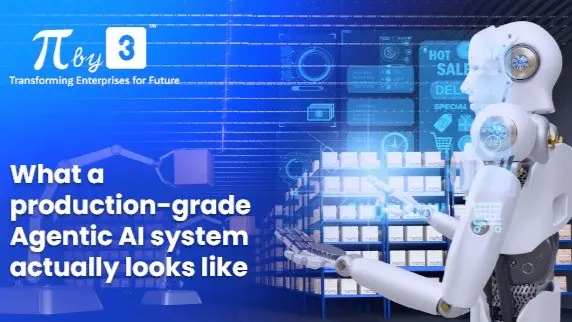
An AI agent is given a goal. It figures out the steps, executes across systems, adapts when something changes, and closes the loop without you managing every move.
One responds. The other acts.
Most products being sold as agents today are glorified assistants. Gartner puts it plainly: many vendors are contributing to the hype by rebranding existing products such as chatbots and automation flows without building agentic capabilities underneath. They call it agent washing.
This matters because enterprises are making significant financial commitments based on what a vendor calls their product not what it does.
THE NUMBERS THAT SHOULD SHAPE YOUR STRATEGY
IDC estimates that 40% of all jobs in the world's 2,000 largest companies will involve active collaboration with AI agents in 2026 alone.
Among companies purchasing AI services for the first time in 2026, Anthropic now wins approximately 70% of head-to-head matchups against OpenAI a complete reversal from a year ago when only one in 25 businesses on the Ramp platform paid for Anthropic at all.
Anthropic's annualised revenue from Claude Code, its agentic coding product, crossed 1 billion dollars by end of 2025 and more than doubled to 2.5 billion dollars by February 2026.
The market is not waiting for consensus. It is already moving.
THREE QUESTIONS TO ASK BEFORE YOUR NEXT AI INVESTMENT
Before you sign anything, make your vendor answer these:
One: Can this system pursue a goal without a human triggering every step? Two: Can it act across multiple tools and data sources independently? Three: Can you show me this in a live environment not a polished demo?
If the answers are no, no, and demo you are buying an assistant with an agent badge.
WHAT PRODUCTION READY AGENTIC AI LOOKS LIKE
At πby3, we built GenAI-in-a-Box 2.0 because we kept seeing the same pattern: enterprises excited about Agentic AI but stuck between vendor promises and actual deployment.
GenAI-in-a-Box 2.0 is a platform that takes enterprises from prompt-based AI to production-ready agentic systems. Multi-agent orchestration, built-in governance, continuous evaluation already lives across insurance, HR, finance, and clinical diagnostics use cases.
WHAT IS NEXT
Next month in π-Pulse: Why 89% of agentic AI pilots never make it to production and exactly what the 11% who got it right did differently.
READY TO SEE WHAT PRODUCTION AGENTIC AI LOOKS LIKE FOR YOUR ENTERPRISE?
Book a live demo with the πby3 team at genaiinabox.ai
Explore how we build at pibythree.com