Overview
Most organisations deploying AI at scale face a familiar tension: give users the compute they need or keep the infrastructure secure. πby3 helped a large enterprise do both without compromise.
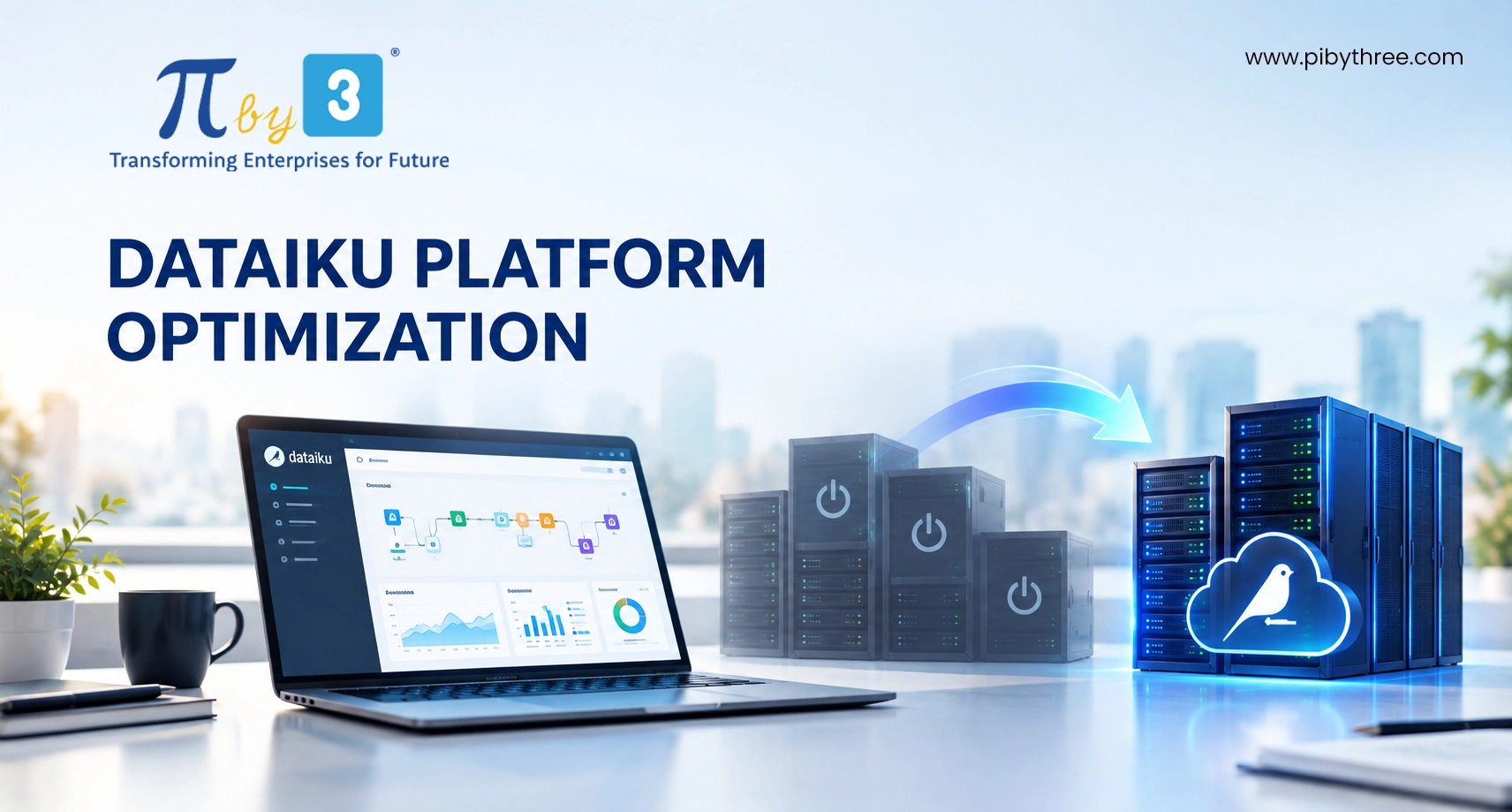
This engagement delivered a private, cloud-native AI platform on AWS, enabling 275 users to run AI, analytics and data engineering workloads through Dataiku while keeping every layer of infrastructure tightly governed and completely off-limits to end users.
AWS was the foundation. Dataiku was the interface. Governance was built in from day one.
The Challenge
Scaling AI adoption inside an enterprise is not purely a tool selection problem it is an infrastructure problem. The client needed to support a growing user base running compute-heavy workloads, while maintaining strict security posture and preventing direct cloud access.
- Unpredictable compute demand from AI and ML workloads requiring both high CPU and GPU resources
- Risk of infrastructure exposure with large user groups interacting with cloud environments directly
- Sensitivity requirements demanding all platform access stay within enterprise network boundaries
- Configuration drift in dynamic cloud environments without continuous monitoring
- Performance instability across hundreds of concurrent users running resource-intensive jobs simultaneously
The Solution
πby3 architected the platform around pillars: private networking, elastic compute, workload isolation and continuous security governance.
Private Network Architecture
All platform components were deployed within AWS private network segments. No service carried direct internet exposure. Access was permitted exclusively through internal corporate network routes, making this a fully private enterprise cloud environment aligned with internal compliance requirements.
Elastic Compute for AI Workloads
AWS elastic compute dynamically allocated CPU and GPU resources based on actual workload demand. Heavy processing jobs got what they needed. Idle periods cost nothing extra. No permanent overprovisioning of expensive infrastructure.
Kubernetes-Based Workload Execution
AI jobs ran inside containerised environments on Kubernetes hosted on AWS providing workload isolation between users, dynamic scheduling, parallel processing, and resource boundaries that prevented one user's job from impacting another's. At 275+ users, this was not optional.
Application-Only Access Model
End users accessed the platform through the Dataiku UI only. No IAM permissions, no cloud access, no infrastructure visibility. Infrastructure provisioning and management remained with platform administrators centralising control without slowing users down.
Continuous Security Posture Monitoring
Security governance shifted from periodic manual audits to automated, continuous scanning across all AWS resources. Non-compliant configurations were flagged in real time, giving administrators visibility to act before issues escalated. As the platform scaled, security scaled with it.
Impact
- 275 AI users supported with consistent platform performance
- Zero cloud infrastructure access for end users’ full separation of concern achieved
- No public exposure platform accessible only within enterprise network boundaries
- Shift from manual audits to automated, real-time security scanning
- Dynamic CPU and GPU provisioning based on live workload demand, not estimates
Before vs. After
Before: Fixed-capacity infrastructure, mixed user access layers, semi-open network exposure, shared compute resources, manual periodic security audits, static CPU/GPU provisioning.
After: Elastic AWS scaling on demand, application-only access for all users, fully private AWS networking, isolated containerised execution, automated continuous cloud scanning, dynamic CPU and GPU allocation.
What This Proves
Enterprise AI adoption does not require a trade-off between user enablement and infrastructure security. When AWS is treated as the platform not just the host you get elastic compute, private networking, containerised execution and continuous governance as a coherent architecture.
πby3 delivered exactly that: a cloud-native platform that gave 275 users the AI capability they needed, without handing them the keys to the infrastructure.
Scalable AI is not just about the application layer. It is about building the right foundation underneath it.